Hiko Nose Lift Price Philippines 2026: Clinic Rates, Threads & Costs
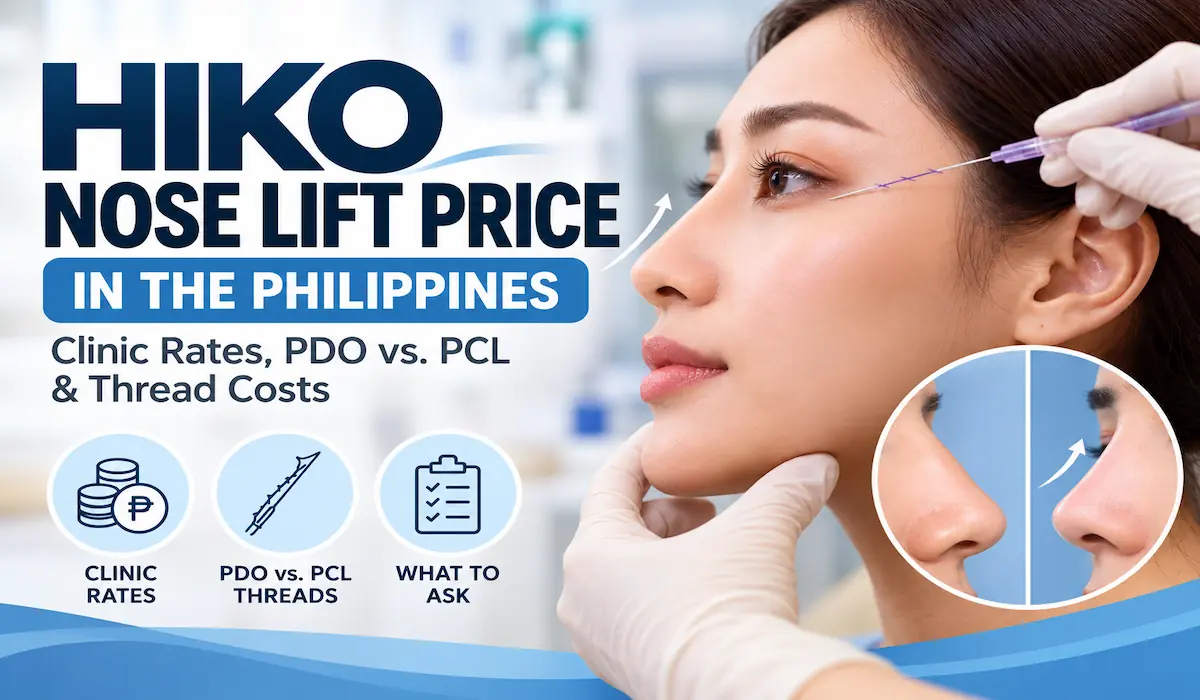
Quick answer: Published HIKO nose lift prices in the Philippines range from approximately ₱5,000 to ₱35,000 or more among the clinic listings reviewed by CareCostPH. Promotional packages are advertised for around ₱6,999–₱7,000, while several standard treatments cost approximately ₱10,000–₱25,000. Premium PCL nose thread lifts can start at ₱35,000. The final price depends on the number and type of threads, the physician and whether fillers or other treatments are included.
When it is used: A HIKO nose lift is a nonsurgical cosmetic procedure that uses absorbable threads placed beneath the skin to improve the appearance of the nasal bridge and tip. It is commonly considered by people who want a slightly higher-looking bridge, more tip definition, or a straighter-looking nasal profile without traditional rhinoplasty surgery. The changes are generally modest and temporary. HIKO does not remove nasal bone or cartilage and is not a treatment for breathing problems.
HIKO Nose Lift Prices in the Philippines
The table below compares advertised prices for different HIKO treatments.
| HIKO treatment or package | Published price | Important details |
|---|---|---|
| Low-price HIKO listing | ₱5,000 | Sansage PH; confirm whether the amount covers the full recommended thread count |
| Promotional HIKO package | ₱6,999–₱7,000 | Discounted clinic offers; thread counts and inclusions differ |
| Standard PDO HIKO | ₱10,599–₱25,000 | Examples from Serenease and Adarna |
| Other standard HIKO treatments | ₱14,999–₱25,000 | Examples from clinic listings and promotional packages |
| HIKO with HA nose filler | ₱19,999 | Combination treatment advertised by Serenease |
| Premium PCL nose thread lift | From ₱35,000 | One Nadela Medical; final price after consultation |
| Additional threads | Confirm with clinic | Some packages charge separately; no consistent current nationwide rate verified |
These are selected published clinic prices, not an official Philippine average. Promotional prices, starting rates and combination packages are not directly interchangeable.
What should you budget? For initial planning, ₱10,000–₱25,000 covers several published standard treatments. Budget promotions may cost less, while premium materials and more extensive treatment plans can cost more.
The cheapest advertised package is not necessarily the cheapest complete treatment. Always confirm the total cost before paying.
HIKO Nose Lift Price by Clinic in the Philippines
CareCostPH reviewed published service pages, clinic price lists and booking promotions.
| Clinic | Location | Advertised price | Package or pricing details |
|---|---|---|---|
| Sansage PH | Confirm branch | ₱5,000 | HIKO listing; clinic notes that treatment typically needs at least four threads |
| The Perfect Beauty Aesthetic Medicine Center | Pasig / Quezon City | ₱6,999 | Five-thread promotion; regular price ₱12,500 |
| Luxx Medical Aesthetics | Quezon City / Cavite / Rizal | ₱6,999 | Advertises threads, fillers, diamond tip and Alartox; final quote after consultation |
| Serenease Aesthetic & Wellness Studio | Quezon City | ₱10,599 | PDO HIKO nose lift |
| Adraneda Dermatology & Cosmetic Surgery Clinic | Confirm clinic branch | ₱16,000 | Nonsurgical nose lift listing with HIKO or filler options |
| Serenease Aesthetic & Wellness Studio | Quezon City | ₱19,999 | HIKO threads with HA nose filler |
| Adarna Medical Aesthetics | Confirm clinic branch | ₱25,000 | Doctor-performed PDO HIKO |
| Beauty Couture | Imus, Cavite | ₱25,000 | HIKO nose lift |
| One Nadela Medical | Makati / Cebu | Starts at ₱35,000 | PCL nose thread lift; listed as out of stock online when reviewed |
What Makes a HIKO Nose Lift More Expensive?
The largest differences usually involve thread quantity, thread material and the complexity of the treatment.
1. Number of threads
A HIKO nose lift may use multiple threads along the nasal bridge or tip. The appropriate number depends on nasal anatomy, thread design and the doctor’s technique.
For example:
- Sansage PH says its treatment typically requires at least four threads.
- The Perfect Beauty’s promotional package includes five threads.
- Some clinics advertise unlimited-thread packages, subject to professional assessment.
More threads do not automatically mean a better or safer result. A physician should determine the number needed rather than placing additional threads simply to increase height.
2. PDO vs. PCL thread material
Two commonly advertised thread materials are:
PDO (polydioxanone): An absorbable material used in medical sutures and cosmetic thread procedures. It is commonly used for temporary nasal contouring.
PCL (polycaprolactone): Another absorbable material. Some aesthetic clinics market PCL threads as longer-lasting, although visible results vary. PCL packages can be more expensive at some clinics, but price also depends on the provider, technique and thread count.
3. Doctor’s qualifications and experience
HIKO involves inserting threads into delicate nasal tissue. Clinics may charge more for procedures performed by experienced physicians, dermatologists or plastic surgeons.
A higher price does not guarantee better results, but the doctor’s training and ability to manage complications are important considerations.
4. Additional cosmetic treatments
Some HIKO packages include:
- Hyaluronic acid (HA) nose filler
- Alartox or botulinum toxin treatments
- Additional nasal-tip contouring
- Other clinic-specific aesthetic procedures
These treatments serve different purposes and introduce their own risks. Do not assume that every additional procedure is necessary or appropriate.
5. Promotional versus regular prices
A clinic may advertise a substantially discounted package to attract bookings. Compare the regular price, promotion expiry, included thread count and total charges before deciding.
PDO vs. PCL HIKO Nose Lift: Price and Differences
| Feature | PDO HIKO | PCL HIKO |
|---|---|---|
| Full name | Polydioxanone | Polycaprolactone |
| Material | Absorbable medical polymer | Absorbable medical polymer |
| Main use | Temporary bridge and tip contouring | Temporary bridge and tip contouring |
| Published price examples | ₱10,599–₱25,000 | From ₱35,000 at One Nadela |
| Visible results | Temporary | Temporary; sometimes marketed as longer-lasting |
| Permanent? | No | No |
The prices above reflect selected reviewed providers, not standardized prices for each material.
Which thread type should you choose?
The decision should depend on the proposed treatment, product characteristics, nasal anatomy and physician’s assessment. Do not choose PCL solely because a clinic advertises longer-lasting results. Likewise, a lower-priced PDO treatment is not automatically inferior.
Ask the doctor what evidence supports the expected duration and what risks are associated with the specific thread product.
How Many Threads Do You Need for a HIKO Nose Lift?
There is no universally correct thread count. A person seeking a small improvement in bridge definition may need a different treatment plan from someone seeking more nasal-tip support. Thread quantity also depends on the thread’s length, thickness, design and placement.
A clinic advertising five threads may be offering a different procedure from one advertising ten or more.
How much do additional HIKO threads cost?
Some promotional packages and clinic listings mention additional thread charges of approximately ₱1,000–₱1,500 per thread. However, CareCostPH could not establish this as a consistently available current rate across the reviewed clinics. Treat that figure as an indicative advertised add-on cost, not a standard Philippine price.
Before booking, ask:
- How many threads are included?
- Is the price per thread or per session?
- What happens if the doctor recommends additional threads?
- Will the clinic confirm the complete amount before treatment?
This matters because a low-priced package can become substantially more expensive when additional threads are billed separately.
How Long Does a HIKO Nose Lift Last?
A HIKO nose lift is temporary, but the duration of visible improvement varies. Clinics often advertise different timelines based on the material used. One Nadela Medical, for example, states that visible PCL HIKO results typically last 12–24 months. That is a clinic-reported expectation rather than a guarantee.
Medical research also suggests that patient satisfaction and visible results may decline over time. In one published study of nose thread lifting, satisfaction was lower at 52 weeks than at 24 weeks among patients assessed at those time points.
The duration depends on several factors, including:
- Thread material and design
- Nasal anatomy and tissue characteristics
- Placement technique
- Degree of correction
- Individual healing and tissue response
Remember: The time it takes for a thread to absorb is not necessarily the same as the time the cosmetic improvement remains visible.
Is HIKO nose lift permanent?
No. PDO and PCL HIKO procedures using absorbable threads are not permanent nose reshaping treatments. Some tissue changes may persist, but the lifting effect can gradually diminish. Patients considering repeat treatments should include future costs and potential complications in their decision.
The Real Cost of Repeating HIKO Treatments
Because the results are temporary, the initial clinic fee may not represent the total long-term cost.
For example:
| Hypothetical treatment plan | Total spending |
|---|---|
| One session at ₱15,000 | ₱15,000 |
| Two sessions at ₱15,000 | ₱30,000 |
| Three sessions at ₱15,000 | ₱45,000 |
| Two sessions at ₱25,000 | ₱50,000 |
These calculations are budgeting examples only. They do not imply that HIKO should be repeated at any particular interval. Repeated thread procedures may create scar tissue and other complications, so a doctor should reassess suitability before further treatment.
HIKO Nose Lift vs. Nose Filler vs. Rhinoplasty
HIKO is not the only procedure used to change the appearance of the nose.
| Feature | HIKO nose lift | HA nose filler | Surgical rhinoplasty |
|---|---|---|---|
| Procedure | Absorbable threads | Injectable hyaluronic acid | Surgery involving nasal structures |
| Main purpose | Modest bridge and tip definition | Selected contour or volume changes | More extensive structural reshaping |
| Results | Temporary | Usually temporary | Intended to be long-lasting |
| Downtime | Usually limited, but varies | Often limited, but varies | Longer recovery |
| Can reduce nasal bone or cartilage? | No | No | May be possible |
| Can address structural breathing problems? | No | No | Sometimes, depending on the surgery |
HIKO vs. nose filler
HIKO threads provide support and contour through thread placement. Nose fillers use injectable material to add volume or smooth selected contours. Some clinics combine the two, but combination treatment is not automatically safer or more effective.
Nasal filler injections can cause serious vascular complications, including skin injury and vision loss.
HIKO vs. surgical rhinoplasty
HIKO may suit someone seeking a relatively small, temporary cosmetic change. Surgical rhinoplasty can address more substantial structural concerns, including certain nasal deformities and functional problems. However, surgery involves different risks, recovery requirements and costs.
A surgical rhinoplasty listing from One Nadela Medical starts at ₱150,000, illustrating how prices can differ from a nonsurgical thread procedure. That is a single provider example, not a nationwide surgical price.
Can you get rhinoplasty after HIKO?
Sometimes, yes. However, previous threads can create scar tissue and alter the normal tissue planes. Published medical literature describes cases in which thread-related complications required surgical removal and reconstruction.
Tell your surgeon about any previous threads or fillers before planning rhinoplasty.
What Is Included in a HIKO Nose Lift Package?
The quoted price may cover only the procedure, or it may include several services.
| Possible inclusion or extra | What to confirm |
|---|---|
| Initial consultation | Included or charged separately? |
| PDO or PCL threads | Which brand, material and quantity? |
| Local anesthesia | Included in the quoted fee? |
| Additional threads | Fixed rate or separate charge? |
| Nose filler or Alartox | Included, optional or separately charged? |
| Aftercare medicines | Included or purchased separately? |
| Follow-up appointment | Free or charged? |
| Thread correction or removal | Who pays if complications occur? |
Example: How a low-price package can become more expensive
Suppose a clinic advertises a ₱7,000 HIKO package. If the clinic separately charges ₱1,000 for each additional thread and a patient is quoted three additional threads, the hypothetical total becomes ₱10,000, excluding other possible charges.
This is an illustration, not a verified quotation from a particular clinic. The safest financial approach is to obtain an itemized final quote before consenting to treatment.
Is a HIKO Nose Lift Safe?
A HIKO nose lift is minimally invasive, but it is still a medical procedure. Possible complications include:
- Swelling, bruising and tenderness
- Uneven nasal contours
- Visible or palpable threads
- Thread migration or extrusion
- Skin dimpling
- Infection
- Inflammatory nodules or granulomas
- Scarring and tissue fibrosis
- Need for thread removal or corrective surgery
A medical review of nonsurgical nose thread procedures describes complications involving protruding threads, migration, infections, dimpling and granuloma formation. Another published study examining patients who required surgery after thread rhinoplasty reported difficult thread removal and tissue changes in some cases.
These findings do not establish that every patient will experience complications. They demonstrate why physician qualifications, appropriate patient selection and follow-up care matter.
How to choose a safer clinic
Before paying, check the following:
Verify the physician. Ask for the doctor’s full name and Professional Regulation Commission (PRC) license number. Relevant training and experience with nasal procedures are also important.
Check the clinic setting. The procedure should be performed in an appropriate medical environment with sterile technique and access to complication management.
Ask about the threads. Request the brand, material, product identification and relevant Philippine FDA regulatory documentation.
Understand the risks. A responsible provider should explain possible complications, realistic outcomes and alternatives before obtaining informed consent.
Check aftercare arrangements. Ask who will evaluate you if a thread becomes visible, painful or infected.
Seek prompt medical assessment if you experience worsening pain, spreading redness, fever, pus, unusual skin discoloration or a thread protruding through the skin.
What Happens During a HIKO Nose Lift?
A typical appointment includes consultation, nasal assessment, preparation, local numbing, thread placement and aftercare instructions. One Nadela Medical describes an overall appointment of approximately 45 minutes to one hour, including numbing time, with the thread-placement portion taking less time.
Actual duration depends on the treatment.
Does HIKO nose lift hurt?
Local numbing is commonly used to reduce discomfort. Patients may experience pressure or discomfort during the procedure and tenderness afterward. Pain experiences differ, and a pain-free treatment cannot be guaranteed.
How long is recovery?
Swelling, bruising or tenderness may occur after treatment. Many patients resume ordinary activities relatively soon, but recovery depends on the procedure and individual response. One Nadela advises avoiding pressure on the nose for approximately two weeks.
Your treating physician should provide specific instructions about exercise, sleeping position, glasses, facial treatments and follow-up care.
Is HIKO Nose Lift Covered by PhilHealth or HMO?
HIKO performed purely for cosmetic enhancement should generally be treated as an out-of-pocket expense. No specific PhilHealth benefit covering elective HIKO nose lifting was identified in the reviewed sources.
Private HMO plans also commonly exclude elective cosmetic procedures, although exact exclusions depend on the insurance contract. If you have an HMO, ask the provider for written confirmation before assuming any coverage.
Are senior citizen or PWD discounts available?
Do not assume a cosmetic HIKO package automatically qualifies for the same statutory discounts that apply to eligible medical services. The applicable rules depend on the nature of the service and the person’s eligibility. Ask the clinic for its written discount policy and an itemized bill.
Where Can You Get a HIKO Nose Lift in the Philippines?
Published treatment listings were identified for clinics serving several areas.
Metro Manila: Quezon City, Pasig, Makati and other locations have aesthetic clinics advertising HIKO or nose thread treatments.
Cavite: Beauty Couture in Imus and Luxx Medical Aesthetics in Kawit are examples of providers with published treatment information.
Rizal: Luxx also advertises a Taytay location.
Cebu: One Nadela Medical lists Cebu among its service locations.
These examples are not recommendations or endorsements of the clinics’ medical quality.
CareCostPH did not find enough comparable published prices to establish dependable citywide HIKO price ranges for Cebu, Davao or other provincial locations.
Frequently Asked Questions
Magkano ang HIKO nose lift sa Philippines?
Among reviewed published listings, HIKO nose lift prices range from approximately ₱5,000 to ₱35,000 or more. Several standard clinic examples fall between ₱10,000 and ₱25,000. Confirm the final price, thread count and inclusions before booking.
Why does one clinic charge ₱7,000 while another charges ₱35,000?
Differences may involve thread material, thread count, doctor experience, treatment complexity and promotional pricing. The ₱35,000 PCL listing is also a starting price rather than a guaranteed final charge.
Is a ₱7,000 HIKO nose lift safe?
Price alone cannot establish safety. Check the physician’s qualifications, the exact thread product, the clinic setting and the procedure’s complication-management arrangements.
Can HIKO make a flat nose higher?
It may create the appearance of a higher or more defined nasal bridge in selected patients. The degree of change depends on anatomy and technique.
Can HIKO make your nose smaller?
HIKO does not remove nasal tissue, cartilage or bone. It may change the appearance of nasal proportions, but it is not a true nose-reduction procedure.
How many threads are needed for HIKO?
There is no universal number. One published promotional package includes five threads, while another clinic says its treatment typically requires at least four. The physician should decide the appropriate quantity.
Can HIKO threads be removed?
Sometimes, but removal may require a medical procedure and can become difficult when threads are embedded in tissue. Absorbable threads should not be described as instantly or easily reversible.
Is HIKO better than rhinoplasty?
HIKO may be appropriate for modest, temporary contour changes. Rhinoplasty is more suitable for some substantial structural changes. Neither is automatically the better option for every person.
Does Belo offer HIKO nose threads?
Belo has been identified in clinic information as offering nose-thread services, with treatment suitability and pricing determined through consultation. Confirm the current service, branch and fee directly because a current public price was not verified for this comparison.
Before You Pay: 10 Questions to Ask the Clinic
Use this checklist when comparing HIKO packages:
- What is the complete price? Is it a starting price, promotional price or final package fee?
- How many threads are included? Is there an additional charge per thread?
- What material is used? PDO, PCL or another type?
- What is the thread brand? Can the clinic provide relevant product and regulatory details?
- Who performs the treatment? What are the physician’s qualifications and PRC license number?
- Is consultation included? Are numbing, medicines and follow-up visits charged separately?
- Does the package include fillers or Alartox? Are those treatments optional?
- What results are realistic for my nose? Can the doctor explain the limitations?
- What happens if there is a complication? Who handles treatment or thread removal, and what might it cost?
- Could HIKO affect future rhinoplasty? Discuss this before treatment if surgery is something you may consider.
How CareCostPH Checked These Prices
CareCostPH reviewed publicly available Philippine clinic service pages, online price listings and promotional booking information on October 17, 2026.
The comparison includes standard rates, promotional offers, starting prices and combination packages, which are identified separately where possible.
The prices are not an official national average. No direct clinic quotations, visits or patient interviews were conducted.
Price takeaway: For initial budgeting, several published HIKO treatments fall around ₱10,000–₱25,000, although lower-priced promotions and premium treatments are also advertised. Compare the complete package, physician qualifications, thread material and follow-up arrangements rather than choosing solely on the lowest advertised price.
Disclaimer: This article provides general price and healthcare information. Clinic fees and treatment availability may change. Confirm the total price directly with the provider and discuss medical risks and suitability with a qualified physician.